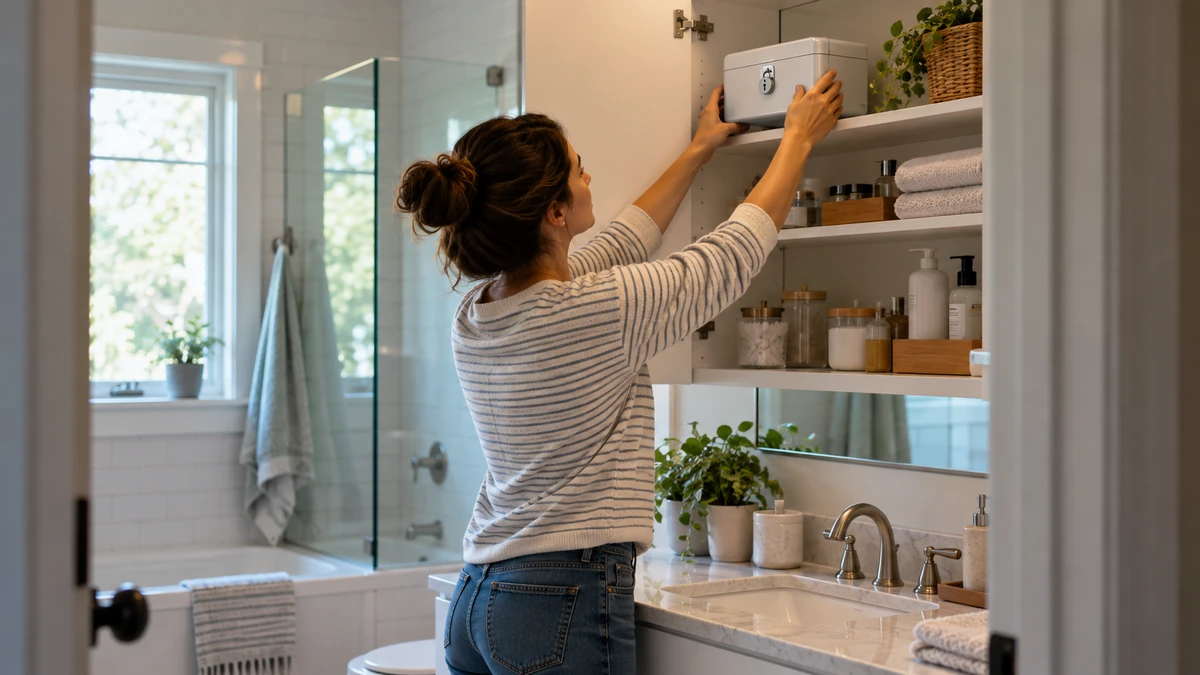
A store medicines safely at home is not a replacement for professional care. It is a practical way to prepare, notice what information is missing, and communicate more clearly. Whether you are working at a tidy home medicine storage area or helping someone else, the goal is simple: reduce mix-ups, accidental access, and damage from unsuitable storage conditions. This guide offers general education, not a diagnosis or a personal treatment plan. For advice about your own symptoms, tests, or medicines, use a qualified clinician or pharmacist who knows your situation.
Why a store medicines safely at home can make care feel more manageable
Health tasks often arrive in pieces: a phone reminder, a paper notice, a portal message, a new question after dinner. A small system prevents those pieces from competing for attention. For households that keep prescription or over-the-counter medicines, a clear record can reduce repeated explanations and make it easier to ask informed questions. It also creates a pause between receiving information and acting on it. That pause matters whenever an issue feels urgent, confusing, or emotionally loaded.
The useful standard is not perfection. A record or plan should be easy to locate, understandable on an ordinary busy day, and simple to update after a change. If a format is so complicated that it is abandoned after one week, it is not serving the person it was meant to help.
What to gather before you begin to store medicines safely at home
Begin with a high or locked storage location, the original containers, a periodic review reminder, and access to local disposal guidance. Set aside a short, realistic block of time and keep private papers out of view of visitors or shared screens. Make a list of unknowns as you work; an unanswered question is more useful than a guessed answer. If you are assisting someone else, agree on what you may view, store, and share before you copy anything.
Focus on this core information: original labels, child-resistant closures where supplied, storage directions on each product, and a current list of medicines kept in the home. The source document is usually more reliable than memory, so check labels, appointment notices, and official reports. Avoid adding details simply because they sound important. Accurate, current, and relevant information is more helpful than a long page of unrelated history.
Build one simple format that you can keep using
Choose paper, a password-protected digital file, or a combination that fits your habits. Give the file a clear name and add the date it was last updated. Choose a storage place based on the instructions printed on each product rather than convenience alone. Keep medicines in their original containers, keep them away from children and visitors who should not access them, and review the area regularly for duplicates, expired items, or products that no longer belong to anyone in the home. A short “questions for next time” area is often more valuable than a longer narrative because it preserves what you still need to ask.
Use plain language for your own notes, but keep official names exactly as they appear on documents when possible. If you are uncertain about spelling, a dose, a date, or a result, mark it as “confirm” rather than filling in a guess. That habit protects the usefulness of the entire system.
Use the information to prepare better questions
Before an appointment, call, or pharmacy visit, read your notes once and select no more than three priorities. A useful starting question is: “Who can reach this medicine, what does its label say about storage, and is it still needed?” Follow-up questions can ask who is responsible for the next step, when an answer is expected, and how you will be contacted. Repeat back a key instruction in your own words if you need to check your understanding.
Preparation works best when it supports a conversation instead of trying to replace one. For an overview of related organization habits, see Organize Emergency Health Information for Your Family. Bring the original documents when possible; your summary, log, or question list should guide the conversation, not overrule professional advice.
Keep privacy and access in balance
Health information is personal, so decide deliberately where it lives and who can access it. A paper folder should be protected from casual viewing. A digital file should use device locks and account protections. If someone helps you manage care, discuss what they truly need to know and how to revoke access later if circumstances change. Do not send private records through an unexpected email, social-media message, or unverified form.
Online information can be useful for basic education, but it is not tailored to you. When you need a reliable starting point, consult an official health-information resource. Use it to prepare questions and understand general concepts, then rely on your own care team for individual decisions.
Avoid common shortcuts that create confusion
Common problems include using a shared pill container for every product, storing medicines loosely, leaving products within easy reach, or discarding them without checking local guidance. Another risk is saving an outdated copy and assuming it is current. Add a small review date to your system and revisit it after an appointment, a new medicine, a change in contact information, or a major health event. Remove only what you have deliberately replaced; old records can matter when a clinician asks about timing.
Keep each household member’s information separate. Similar names, shared devices, and mixed folders create preventable mistakes. If you use a caregiver or family system, label ownership clearly and keep a brief note about where the current version is stored.
Make the next step easy to find
End each entry with one action: call the office, bring a document, ask a question, schedule a review, or wait for a stated result. When no action is needed, write that too. A visible next step helps prevent a record from becoming a pile of information that nobody uses. The complementary guide Spot Misleading Health Claims Online Before You Share or Buy shows another way to turn health information into a practical appointment tool.
You may also find related practical reading from ZilaBlog helpful for general planning ideas. Treat any outside article as education, check the date and source, and keep your own clinician’s instructions at the center of personal care decisions.
When to ask for help instead of trying to solve it alone
It is reasonable to ask for help when details conflict, a form or report is unclear, or the task affects a medicine, test, or important care decision. In that situation, ask a pharmacist for storage or disposal advice when the label is unclear or you have medicines you no longer need. If there is an emergency or severe symptom, use local emergency services or the urgent instructions already provided by your care team rather than waiting for an online reply.
A trusted family member or caregiver can help with organization, but they should not be expected to interpret medical information beyond their role. Bring questions to the professional who can answer them and make sure the final plan is recorded in a place you can find again.
Make a small, repeatable decision rule
When a new document, reminder, or question arrives, use one rule: verify the source, file the item, and write the next action. This prevents a stream of information from becoming a stream of worry. A letter that needs no action can be filed. A question that needs an answer can be placed at the top of the next-visit list. A time-sensitive concern belongs with the office or service that gave you instructions, not in a folder for later.
For this particular task, return to the purpose: reduce mix-ups, accidental access, and damage from unsuitable storage conditions. A good check is whether a trusted person could understand the next step without interpreting medical information for you. If not, shorten the note, add a date, and identify the right person to contact. Keeping the system practical also makes it easier to notice a question that deserves professional attention rather than online searching.
Use the system at the next real-life moment
The next time you are preparing at a tidy home medicine storage area, try one small test: find the current information, identify one question, and decide what you will do with the answer. This practical rehearsal reveals whether your store medicines safely at home is located where you expect, whether the wording makes sense, and whether any private details are exposed too broadly. Adjust the format based on that experience rather than starting over.
Remember that organization supports care; it does not create certainty or replace clinical judgment. Information may change, records may be incomplete, and a clinician may need to ask questions that your notes do not answer. Bringing a clear starting point helps that process. It leaves more room for the concerns only a real conversation can address.
A calm checklist for the day before
On the day before you need this information, open or locate the current version and check five things. First, is it dated and clearly identified? Second, do the names, contacts, and labels match the original documents you have now? Third, is the next action visible? Fourth, can households that keep prescription or over-the-counter medicines explain where it is without exposing it to people who do not need access? Fifth, is there one question that needs a professional answer? This five-point check is deliberately modest. It helps you prepare without converting an ordinary health task into an all-night research project.
If a detail is missing, write down exactly what is missing and where you expect to get it. For example, you may need to check an appointment notice, call a pharmacy, download a report from an official portal, or ask a clinician at the next visit. Avoid filling gaps with advice from an unrelated social-media post or product page. The point of a checklist is to make uncertainty visible and manageable, not to make you solve every uncertainty yourself.
Finally, choose one backup method that matches the sensitivity of the information. A secure digital copy can be useful when travelling; a printed copy can be easier in a power outage or at an in-person visit. Keep only the information needed for the purpose—reduce mix-ups, accidental access, and damage from unsuitable storage conditions—and review who has access. A smaller, accurate set of information is usually safer and more useful than a large collection that is difficult to protect or update.
A ten-minute maintenance routine
Set a calendar reminder for a regular check-in. In ten minutes, confirm contact information, compare any current medicine list with original labels, file new documents, and note questions for the next appointment. A brief recurring review is more sustainable than a rare, exhausting overhaul. It also makes it easier to notice when a document belongs somewhere else or needs a professional explanation.
The best system is the one you can use under normal conditions. Start small, protect private information, and improve the format after you have used it in a real conversation. That is how an ordinary note, folder, or log becomes a helpful bridge between daily life and informed care.





Be First to Comment